LLMs vs SLMs: Which One Actually Belongs in Your Product?
Large language models get all the headlines. But for most real-world engineering applications — especially in resource-constrained environments like Nigeria — smaller, specialised models may be the smarter choice. Here is how to think about it.
The hype around large language models
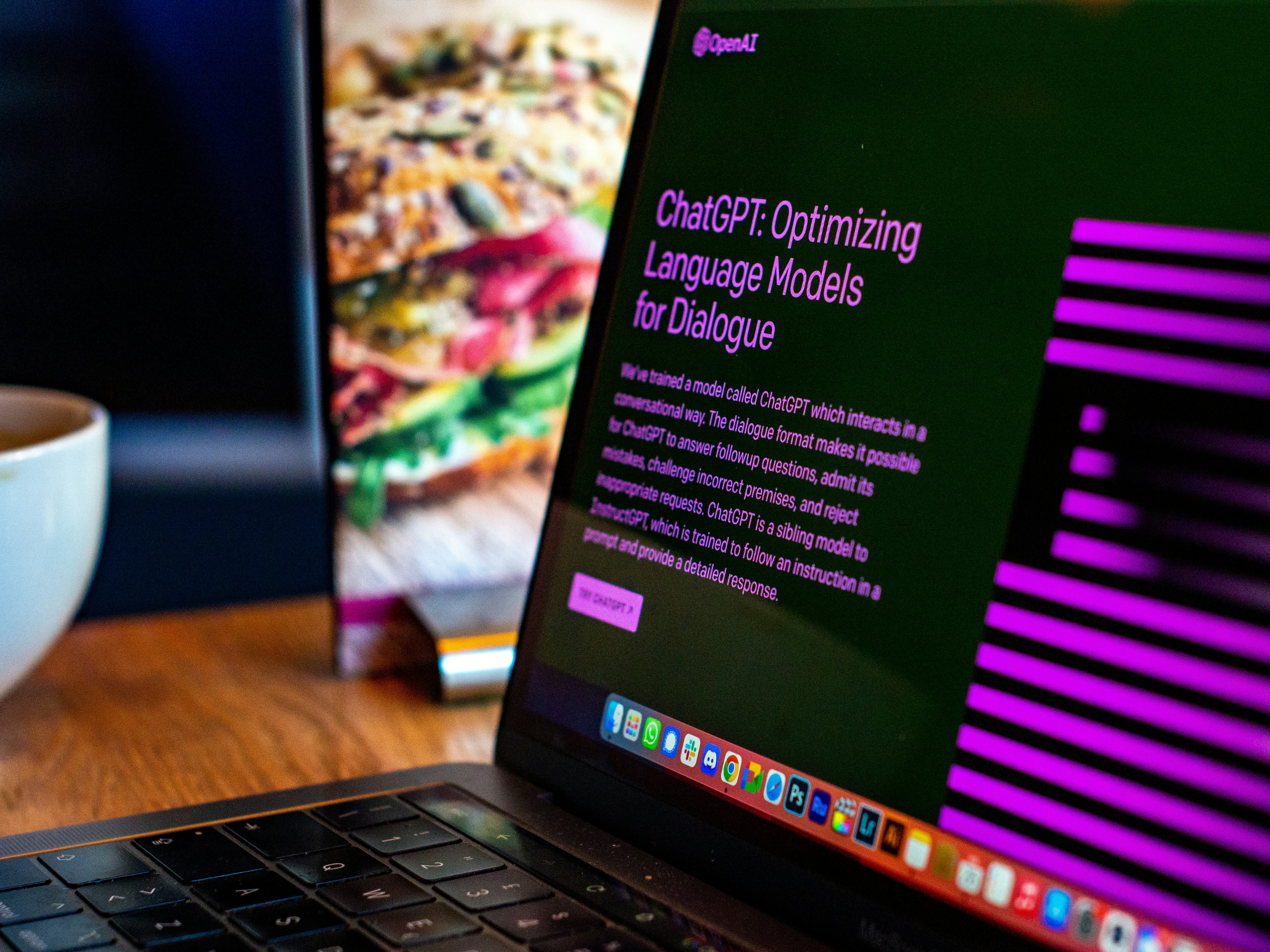
Since the public release of GPT-3 and its successors, large language models have dominated the conversation around artificial intelligence. And for good reason — the capabilities of these systems are genuinely remarkable. They can write code, summarise documents, translate languages, answer complex questions, and generate coherent long-form text across almost any domain.
But the conversation around LLMs has created a distorted picture of what AI deployment looks like in practice. The assumption — implicit in much of the media coverage and even in many enterprise AI strategies — is that bigger is always better. That the right answer to any AI problem is a large, general-purpose model with as many parameters as possible.
This assumption is often wrong. And for engineers and product builders working in resource-constrained environments — including most of sub-Saharan Africa — it is not just wrong, it is actively counterproductive.
What actually separates LLMs from SLMs
The distinction between large language models and small language models is not simply about parameter count, though that is the most obvious difference. LLMs typically have billions to hundreds of billions of parameters. SLMs operate in the range of millions to a few billion.
But the more important difference is purpose. LLMs are designed to be generalists — trained on enormous, diverse datasets to perform reasonably well across a huge range of tasks. SLMs are typically designed for specific domains or tasks, trained on focused datasets, and optimised for efficiency as much as capability.
The practical consequences of this difference are significant. An LLM requires substantial compute infrastructure to run — GPU servers, high-bandwidth internet connections, significant energy consumption. An SLM can often run on a laptop, a mobile device, or an edge computing unit. An LLM costs money to query via API at scale. An SLM can be deployed locally, with no per-query cost and no dependency on external services.
When you actually need an LLM
LLMs earn their cost and complexity when the task genuinely requires broad general knowledge, nuanced language understanding, or the ability to handle highly variable, unpredictable inputs. Customer-facing conversational interfaces, complex document analysis across diverse domains, creative content generation — these are tasks where the breadth of an LLM is genuinely valuable.
When an SLM is the smarter choice
For most engineering applications, the task is well-defined. You are classifying sensor readings. You are extracting structured data from a specific type of document. You are predicting equipment failure from a particular set of operational parameters. You are routing customer queries into a fixed taxonomy of categories.
For these tasks, a fine-tuned SLM will typically match or exceed the performance of a general LLM — at a fraction of the cost, with lower latency, and with the ability to run entirely on local infrastructure. In contexts where internet connectivity is unreliable or expensive, local deployment is not just a preference — it is a requirement.
The Nigerian engineering context
For engineers building products in Nigeria and across Africa, the SLM question has particular urgency. Infrastructure constraints are real. Data costs are real. Latency over mobile networks is real. A product that depends on making hundreds of API calls to an overseas LLM provider is a fragile product.
The most robust AI products for African markets will be those built on lean, locally deployable models — fine-tuned on domain-specific data, running efficiently on available hardware, and designed to degrade gracefully when connectivity is limited.
This is not a concession to constraint. It is good engineering.
Writing at the intersection of deep technology, engineering, and society. Part of the ORREL team building AI, robotics, and renewable energy solutions from Nigeria.